

Erdogan, Mitsotakis hold Ankara talks
Turkish and Greek leaders seek to ease maritime tensions
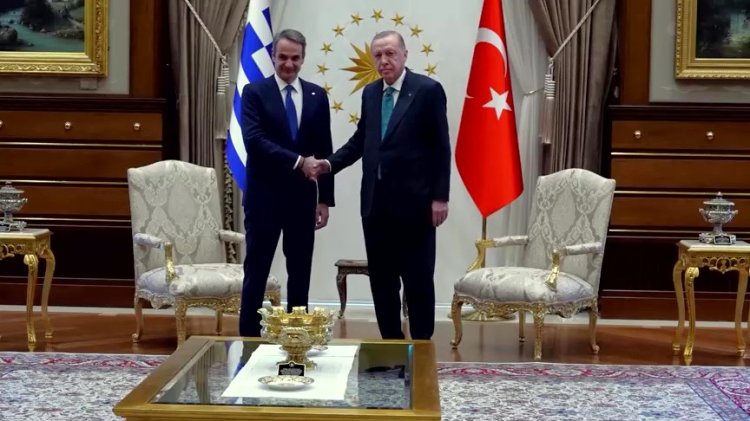
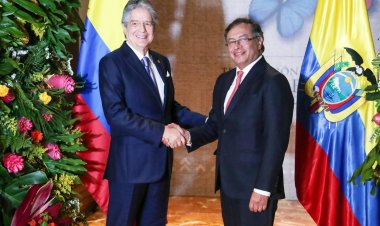
Turkish President Tayyip Erdogan and Greek Prime Minister Kyriakos Mitsotakis held high‑level talks in Ankara aiming to ease long‑standing maritime tensions that have strained relations between the NATO neighbours. Both leaders described the meeting as constructive and said they discussed disputes in the Aegean and eastern Mediterranean “openly and sincerely,” while expressing a shared interest in managing differences through dialogue rather than confrontation.
The talks focused on maritime boundaries, exclusive economic zones, airspace issues, energy exploration and related security risks. Mitsotakis reiterated Athens’ position that maritime delimitation is the central legal dispute and urged Turkey to lift its longstanding “casus belli” threat tied to any unilateral Greek extension of territorial waters; Erdogan said the problems are “complex but not insurmountable” if addressed in good faith under international law. Ankara has recently protested Greek statements about extending territorial waters and issued a maritime notice asking Greece to coordinate research in areas Turkey regards as part of its continental shelf.
Migration and security cooperation were also on the agenda. Mitsotakis highlighted a significant drop in migrant crossings in the Aegean last year, attributing the reduction to bilateral cooperation, and called for stronger collaboration to prevent irregular flows. The talks followed a recent deadly shipwreck off Chios that killed migrants after a collision at sea, underscoring the human cost of migration-management failings cited by both sides.
Leaders signed a series of bilateral agreements on trade, investment, disaster response, culture and transport and set a joint economic target to boost bilateral trade to $10 billion, framing deeper economic ties as a stabilising factor. They agreed to keep high‑level contacts and to task foreign ministries with advancing technical discussions and confidence‑building measures between their militaries to reduce the risk of incidents in contested waters and airspace.
Despite the conciliatory tone, fundamental disagreements remain unresolved, including rival claims in offshore energy areas and the divided island of Cyprus, where Turkey and Greece back different solutions. Domestic political sensitivities and past cycles of recrimination mean observers caution that progress will be incremental and contingent on sustained diplomatic restraint.