

Floods devastate northern Colombia
Over 50,000 families displaced as rivers overflow
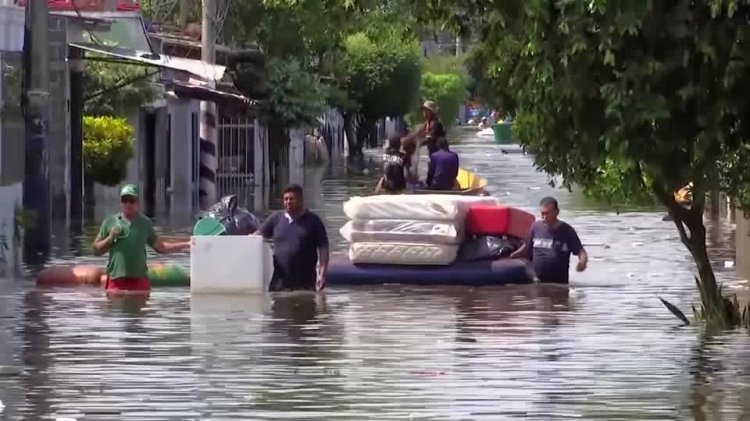
Residents of northern Colombia are contending with widespread devastation after intense rainfall caused rivers to overflow, flooding neighborhoods and transforming streets into canals. In Montería, Cordoba, scenes showed people wading through knee- to waist-deep water, loading mattresses, bicycles and household goods onto canoes and improvised boats as they tried to salvage belongings. More than 50,000 families were displaced across 27 municipalities, and numerous districts remained submerged as authorities and humanitarian groups scrambled to deliver aid.
Local officials reported water levels falling by 10–15 centimeters in parts of Montería over a 24-hour period, but large areas still face severe inundation. Drainage systems were overwhelmed and clogged canals worsened flooding in many neighborhoods; cars were left submerged, storefronts filled with water, and power outages occurred after water reached electrical installations. Emergency teams deployed inflatable boats to rescue people trapped in homes and vehicles, while shelters in schools and community centers opened to house evacuees.
Hospitals treated residents for minor injuries, hypothermia and water-related ailments, and health authorities warned of contamination risks from sewage and stagnant water, advising residents to avoid contact with floodwater and boil drinking water. Mosquito control measures were being considered to reduce the threat of vector-borne disease. Transportation networks were severely disrupted as major roads became impassable and public bus services were suspended in affected districts, forcing businesses to close and deepening economic losses for small traders.
City engineers began damage assessments of housing, bridges and roads to determine structural safety before reopening. Preliminary estimates indicate significant losses to housing, infrastructure and commerce. Officials linked the extreme rainfall to broader climate patterns that have increased the frequency of heavy-precipitation events, and called for urgent investment in drainage and flood control. Residents expressed frustration over delayed infrastructure upgrades and alleged poor urban planning that left some communities particularly vulnerable.
National authorities pledged emergency funds and technical assistance to support recovery, while environmental groups urged stronger river management and sustainable urban development. Cleanup efforts started as waters receded in some areas: municipal crews removed debris, and residents swept mud from homes and shops, though the smell of damp and sewage lingered.