

Mass burial held in Deir al-Balah
Unidentified bodies laid to rest in Gaza
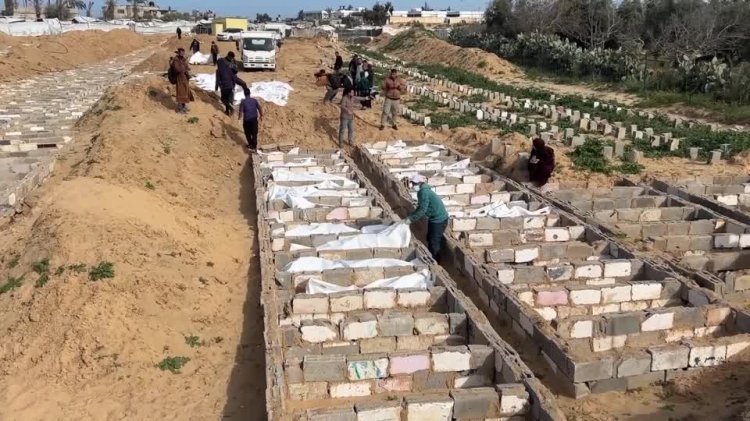
A mass burial was held in Deir al‑Balah for dozens of unidentified Palestinians whose bodies were recently returned by Israeli authorities via the International Committee of the Red Cross. Gaza officials said 53 bodies and about 86 bags of human remains were handed over in the latest transfer; earlier reporting by Gaza’s health ministry cited a similar previous delivery. Shrouded bodies were placed in numbered, unmarked graves after forensic teams, constrained by limited resources and the advanced state of decomposition of many remains, were unable to confirm identities. DNA samples and records were taken where possible to support future identification.
Mourners attended the somber ceremony, which included funeral prayers and visible grief from families of the missing who held photographs of loved ones. Gaza officials said the remains had been kept at Al‑Shifa Hospital and shown to relatives before burial, but identifications could not be made. Authorities prepared a designated cemetery plot and used bulldozers to cover graves after interment; officials described the burial as an effort to grant a measure of dignity amid the difficulties of identification and storage.
Gaza’s cemeteries director and representatives of committees managing unidentified bodies urged more transparency and improved coordination over returns, while human rights groups called for adherence to international humanitarian law on the treatment and timely return of the dead. Israeli authorities did not immediately comment; past statements from Israeli officials say transfers follow security and identification procedures and are coordinated through established channels.
The transfer and burial took place within the broader context of the conflict that began with the October 7 attacks and subsequent Israeli military operations in Gaza, which have produced large numbers of casualties and widespread destruction. Civil defence teams continue to recover bodies from rubble, and hospitals face strained capacity for storage and forensic work. Aid organisations have urged increased forensic support and international assistance to improve identification processes and to help families seeking information about missing relatives.
Officials described the gravesite as a temporary resting place, with records kept to facilitate any later confirmation of identity. For many families, the interment provided a painful but necessary moment of closure amid ongoing displacement and infrastructure damage across the territory.