

Kazakh volunteers aid Kyiv residents
Outdoor kitchens serve hot meals after outages
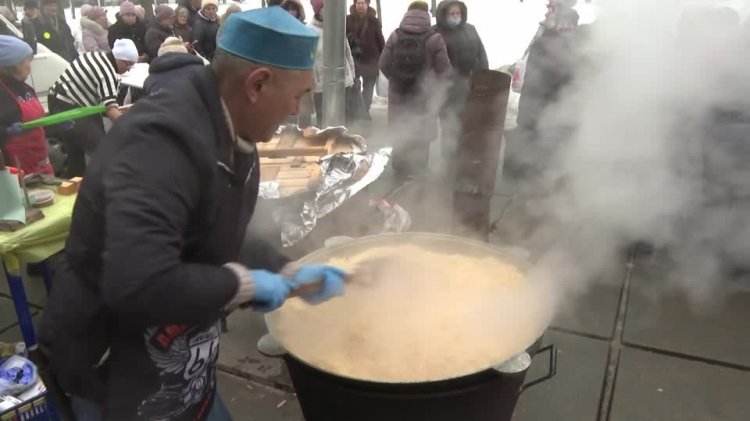
Ethnic Kazakh volunteers have set up outdoor kitchens in a Kyiv residential district to serve hot traditional meals and provide basic supplies to residents left without heating or electricity after strikes on the energy grid. Volunteers prepared large pots of plov and handed out tea, blankets and hygiene items to more than a hundred people, many of them elderly residents queuing in near‑freezing conditions. Organizers—members of the Kazakh diaspora and aid groups—said the effort aims to deliver immediate relief and moral support, ensuring people do not feel abandoned during repeated outages.
Distribution points and mobile teams have focused on neighborhoods hardest hit by service interruptions, delivering food to apartment blocks where elevators and heating systems have failed and establishing warming points where residents can recharge phones and access heat. Volunteers coordinated with local authorities and community leaders to target the most vulnerable, adjusting schedules based on outage duration and severity.
Residents expressed gratitude, noting hot meals are vital when cooking is impossible and when climbing stairs without working elevators is physically taxing. Volunteers—many long‑term residents of Ukraine—said they consider Kyiv a second home and intend to continue operations while donations permit. They monitor safety advisories and adapt activities to security conditions.
The outages are part of a wider winter energy crisis caused by repeated attacks on infrastructure, which has forced rolling blackouts and emergency repairs across the city. Repair crews and international aid teams are working to restore services and supply generators, but infrastructure damage and limited resources mean gaps persist, particularly ahead of a forecast cold snap expected next week.
The Kazakh initiative reflects broader regional and grassroots solidarity: individuals and civil society groups from multiple countries have independently organized humanitarian support. While longer‑term restoration of electricity and heating is needed, volunteers say immediate assistance helps protect vulnerable residents and reinforces community resilience during ongoing hardship.