

Novi Sad protesters demand reforms
March calls for early elections and accountability
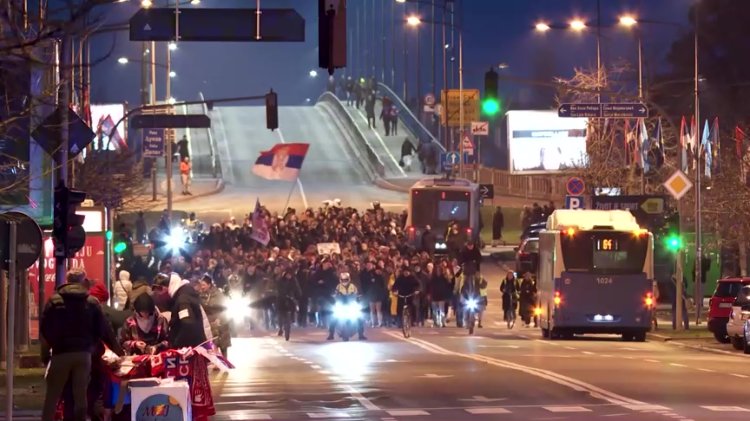
Protesters marched through Novi Sad, pressing for early elections and anti-corruption reforms as the anti-government movement entered its sixteenth month. The student-led demonstrations, sparked after a November roof collapse at the city’s railway station that killed 16 people, coincided with a city event marking the 200th anniversary of Matica Srpska that senior government officials were expected to attend.
Thousands joined the rally—students, civil society activists, opposition supporters and local residents—carrying banners and national flags and chanting for political accountability, institutional independence and greater media freedom. Organizers described the demonstration as peaceful and nonpartisan, urging sustained civic engagement and legal, constitutional channels for reform. Speakers called for unity across social groups and emphasized systemic change rather than short-term political gains.
The march moved along designated routes under a visible police presence focused on traffic management and crowd control; authorities reported no major incidents. Police said they were facilitating the right to assembly while ensuring public safety. Families and older citizens were among participants, contributing to an energetic but orderly atmosphere.
Analysts say Novi Sad’s protests carry significance beyond the city—Serbia’s second-largest urban center and a cultural hub—reflecting wider public sentiment outside the capital. Protesters point to centralized political power and weak institutional independence as core problems; the government counters that recent investments and macroeconomic stability demonstrate effective leadership and describes rallies as politically driven.
International observers have at times raised concerns about press freedom and political competition in Serbia, issues frequently cited by demonstrators. Opposition parties are seeking to harness public dissatisfaction, while the ruling coalition defends its record on economic growth and infrastructure.
Organizers pledged to continue demonstrations if demands are not met, announcing further gatherings and urging ongoing civic participation. The sustained scale and frequency of rallies in Novi Sad and other cities indicate persistent public pressure on authorities and an ongoing debate over the country’s political direction.