

Pristina rally backs ex-KLA leaders
Protesters denounce Hague war crimes trial
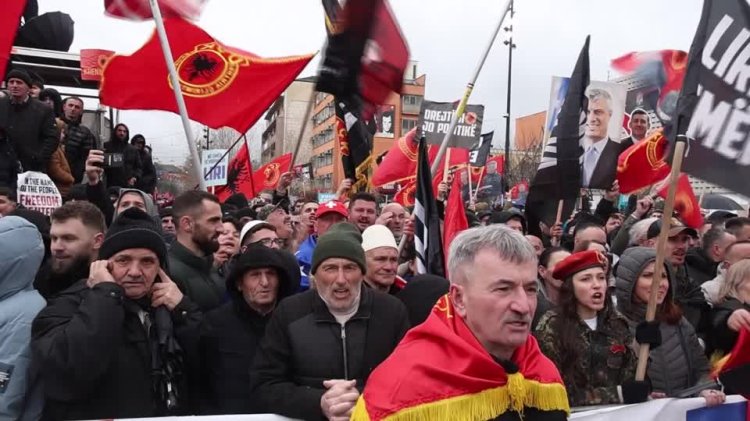
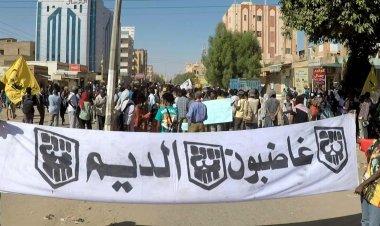
Thousands of people gathered in Pristina to protest the war crimes trial of former Kosovo Liberation Army (KLA) leaders, including ex-president Hashim Thaci, who stand accused of persecution, murder, torture and forced disappearances during the 1998–99 conflict. The demonstrators—many in KLA uniforms and waving KLA, Kosovo and Albanian flags—portrayed the defendants as liberation heroes and denounced the proceedings at the Kosovo Specialist Chambers in The Hague as politically motivated and unjust.
Thaci, Jakup Krasniqi, Kadri Veseli and Rexhep Selimi were arrested in 2020 and sent to the specialist court, which operates in the Netherlands under Kosovo law to reduce risks of witness intimidation. The court is hearing closing arguments and judges must deliver a verdict within three months; prosecutors have sought 45-year sentences for each defendant. The accused have denied all charges.
Speakers and participants at the rally argued the tribunal unfairly targets former KLA figures while failing to address crimes committed by Serbian forces during the insurgency that left an estimated 13,000 people—mostly Kosovo Albanians—dead. Protesters carried placards reading “Freedom has a name” and displayed photos of the accused labeled “Heroes of War and Peace.” Some attendees traveled from neighboring Albania to join the demonstration.
Local police maintained security and reported the protest remained largely peaceful. Organizers said the rally aimed to show solidarity with the defendants and press Kosovo’s political leadership to defend the national narrative of the KLA as liberators. Government officials stopped short of endorsing the demonstration, stressing respect for the justice process while acknowledging widespread emotional responses to the trials.
Analysts and human rights groups note the protests reflect a deep tension between national perceptions of the KLA’s role in independence and international demands for accountability. The Specialist Chambers’ mandate—narrowly focused on alleged crimes by certain individuals—has been controversial in Kosovo, where many view it as singling out one side of the conflict. Observers warn that the trial’s outcome could carry significant political repercussions, further polarizing public opinion about how the legacy of the 1998–99 war should be addressed.
Human rights organizations have called for due process and impartial adjudication, arguing that credible, transparent trials are essential for victims’ rights and long-term reconciliation. As the legal proceedings proceeded in The Hague, the Pristina rally underscored how wartime memories and questions of justice continue to shape Kosovo’s political and social landscape.