

Australia Indonesia sign security pact
Deal expands defence cooperation without forming an alliance
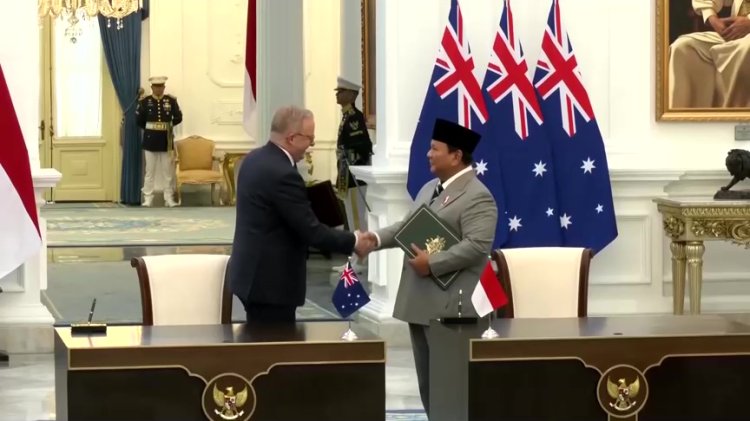
Australian Prime Minister Anthony Albanese was received at Jakarta’s Presidential Palace by President Prabowo Subianto and the two leaders signed a new security pact formalizing closer defence and strategic cooperation between the neighbouring nations.
The agreement, modelled on a 1995 deal that was withdrawn in 1999, commits Indonesia and Australia to consult each other if either faces a threat and will expand coordination on areas including maritime security, intelligence sharing, joint military exercises, counterterrorism, disaster response and emerging domains such as cyber security and critical‑infrastructure protection.
Officials presented the pact as a pragmatic, non‑alliance arrangement that does not target any country and is consistent with Indonesia’s policy of non‑alignment; both sides said it underpins a rules‑based regional order and bolsters stability amid rising Indo‑Pacific tensions.
Leaders described the signing as a milestone in bilateral ties after years of uneven relations, noting that implementation will be gradual through working groups and regular dialogues focused on practical cooperation. The pact responds to shared concerns—illegal fishing, smuggling, threats to sea lanes, online radicalization and natural disasters—while aiming to avoid escalation in great‑power competition.
Domestic commentary urged transparency and parliamentary scrutiny in Indonesia and called in Australia for clarity on how the agreement fits with other defence arrangements. Regional diplomats welcomed the potential for enhanced stability but cautioned that closer security ties must be managed sensitively to respect sovereignty and avoid fueling rivalry.
Both governments said the pact strengthens cooperation without forming a formal military bloc, and officials emphasized the intent to deliver tangible operational benefits rather than headline commitments.