

Protests mark Hind’s Hall anniversary
Students rally for ceasefire and divestment
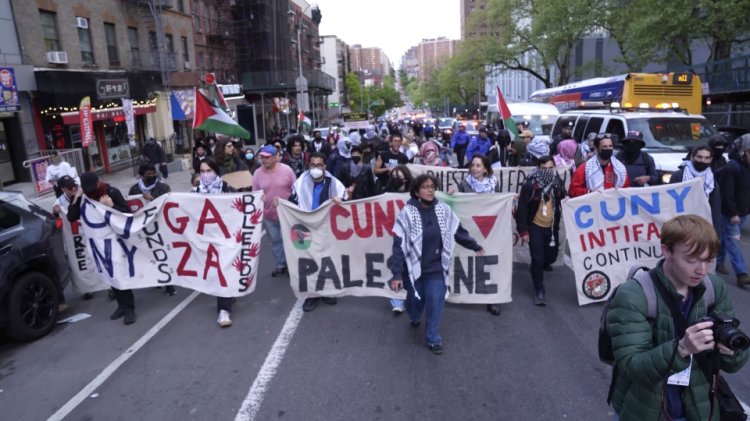
Pro-Palestinian demonstrators gathered outside Columbia University to mark the anniversary of the Hind’s Hall protest, honoring Palestinian scholars killed in Gaza and renewing demands including the release of detainees. Participants held rallies, speeches and commemorative events before marching toward the City University of New York, calling for a ceasefire, an end to military operations, divestment from firms linked to Israeli military activities, and greater transparency in university partnerships.
Organizers recalled last year’s occupation of a campus building renamed Hind’s Hall in memory of a young Palestinian girl cited by activists as emblematic of civilian suffering. Students, faculty and community activists carried banners and chanted slogans demanding institutional changes and sustained student activism, arguing universities shape public discourse through investments and affiliations.
University officials kept a visible presence with campus security monitoring the gathering to keep it peaceful and avoid disruptions seen in past demonstrations. The protest drew counterpoints from other student groups, highlighting broader campus divisions over free speech, academic neutrality and the role of universities in global political issues.
According to Gaza’s Health Ministry, at least 824 Palestinians were killed and 2,316 injured in recent Israeli attacks since the ceasefire; officials and activists say the broader conflict has killed over 72,000 Palestinians and injured more than 172,000 since October 2023. Despite the truce, Israeli strikes and restrictions on food, medicine and shelter materials continue, leaving about 2.4 million Palestinians, including 1.5 million displaced, in dire humanitarian conditions.
Columbia has been a focal point of nationwide demonstrations, encampments and administrative responses related to the Israel-Palestine conflict. Analysts say campus movements reflect a broader wave of youth-led political engagement and that further demonstrations, teach-ins and advocacy efforts are likely to continue at Columbia and other universities.