

New Triassic reptile found in Brazil
Discovery reveals ancient species with parrot-like beak
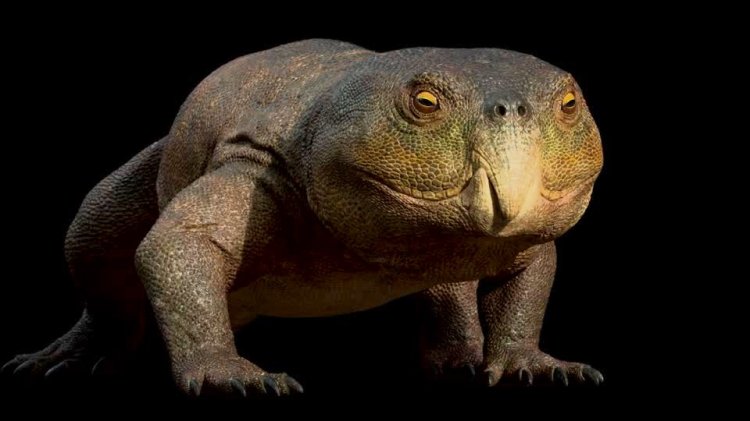
Paleontologists in Brazil have announced the discovery of a new 230‑million‑year‑old reptile species with a parrot‑like beak, expanding knowledge of Triassic herbivores and continental faunal links. Researchers from the Federal University of Santa Maria (UFSM), led by Rodrigo Temp Muller with master’s student Jeung Hee Schiefelbein, described the species Isodapedon varzealis in Royal Society Open Science after excavating a well‑preserved skull near Agudo in Rio Grande do Sul in 2020.
The animal is a rhynchosaur, a group of stout, quadrupedal herbivores known for beak‑like jaws adapted to cropping vegetation and possibly digging for roots. Estimated at 1.2–1.5 metres long, Isodapedon varzealis shows a pointed rostrum and dental anatomy consistent with plant processing. Careful preparation of the fossil—especially delicate work to expose the tooth region—took over six months and revealed the morphological features required for taxonomic placement.
The find raises Brazil’s known Triassic rhynchosaur diversity to six species and is notable because the new specimen was recovered from strata already yielding three other rhynchosaurs, suggesting the clade reached a local peak in diversity contemporaneous with the earliest dinosaurs. A phylogenetic analysis uncovered strong similarities between the Brazilian specimen and a rhynchosaur of comparable age from Scotland, a pattern the team links to the existence of the supercontinent Pangaea roughly 230 million years ago, when terrestrial dispersal across vast connected landmasses allowed closely related forms to occur on now‑distant continents.
Beyond adding a new species to the rhynchosaur record, the discovery holds value for stratigraphy: rhynchosaur fossils serve as useful geological time markers that help refine dating of Triassic rock units. Researchers say continued study of Isodapedon varzealis will improve understanding of rhynchosaur anatomy, feeding ecology and biogeography during a pivotal interval of vertebrate evolution following the Permian extinction. The find underscores southern Brazil’s importance as a rich archive of early Mesozoic terrestrial life and highlights how detailed fossil preparation and comparative analysis can illuminate ancient global connections among prehistoric vertebrates.