

Mourners honor rescuers killed in Lebanon
Strikes deepen toll as displacement and destruction grow
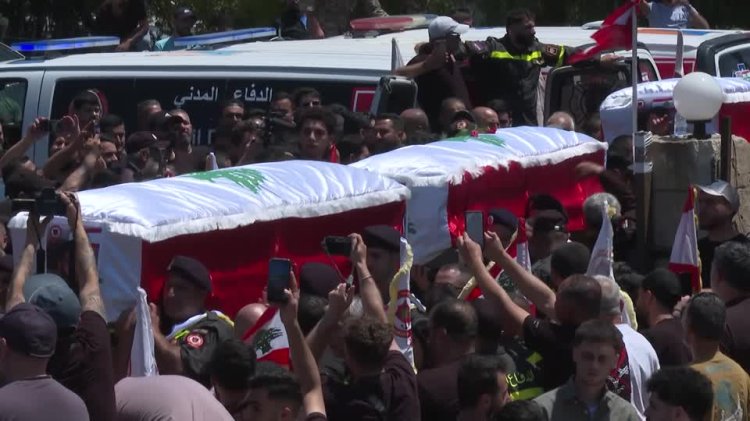
Relatives, friends and colleagues gathered in Tyre to mourn three rescuers killed when two successive strikes hit a building in Majdal Zoun, officials said. Lebanon’s health ministry reported five people killed in the incident; the three civil defense rescuers were trapped under rubble by the second strike and later confirmed dead. The Lebanese prime minister condemned the attacks as a war crime, and the UN human rights office has warned that strikes on civilians and healthcare workers in Lebanon may amount to war crimes. More than 2,500 people have been killed in Israeli strikes across Lebanon since clashes escalated, including scores of medics, women and children. Although a U.S.-mediated ceasefire reduced hostilities, exchanges between Israel and Hezbollah continue, with both sides accusing the other of violations.
The wider conflict has driven 1.2 million Lebanese from their homes and left many villages destroyed. Former residents of Kfar Kila described how their community—once a farming hub of about 5,500 people known for olive oil, bakeries and social life—has been largely razed amid Israeli operations targeting alleged Hezbollah infrastructure. Israeli authorities describe Kfar Kila as a Hezbollah stronghold and say they found extensive weapons caches there. Residents recalled daily life, festivals and markets now replaced by ruins; by late April, an Israeli official said over 90% of Kfar Kila’s homes had been destroyed.
Some displaced families temporarily returned after a prior ceasefire, but renewed fighting and demolitions drove many away again. A handful of residents have erected prefabricated shelters near the ruins, while others rely on sparse phone contact to maintain ties. Local leaders and former villagers voiced fears the temporary buffer zone could become permanent, citing historical precedents of territory annexation. The destruction has shattered communal rhythms—weddings, harvests and religious observances—and left survivors coping with loss, damaged homes and an uncertain future.