

Pope washes feet in Holy Thursday rite
Pontiff urges compassion and support for clergy
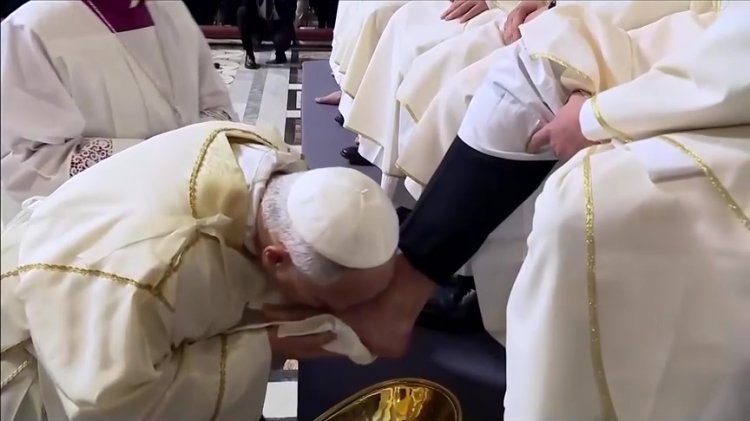
Pope Leo washed the feet of 12 priests in a Holy Thursday ceremony at Rome’s Basilica of St. John Lateran, invoking Jesus’s example of humility and urging Catholics to care for the oppressed. He knelt to pour water over each priest’s feet, then dried and kissed them, calling on the faithful to “kneel down as brothers and sisters alongside the oppressed” in the face of widespread brutality. The pope, the first from the United States and in office since last May, framed the rite as a call to concrete acts of compassion rather than domination, and dedicated his monthly prayer intention to support and encourage priests, noting that clergy often work long hours and lead multiple parishes.
Vatican officials said the choice to hold the ritual in the Lateran signaled special support for Catholic clergy and their wellbeing. The move marked a change from the late Pope Francis’s practice of conducting foot-washing services outside churches—frequently in prisons, nursing homes or hospices—to highlight solidarity with marginalized groups. Francis made a surprise visit to Rome’s overcrowded Regina Coeli prison last Easter while recovering from illness, an example of that outreach-focused approach.
The ceremony, part of Holy Week observances leading to Easter, drew clergy and worshippers and underscored themes of service, humility and pastoral care. The pope urged believers to translate spiritual witness into practical help for those suffering from conflict, poverty and injustice, linking the ritual to broader humanitarian concerns. His recent sharp criticism of the war in Iran informed remarks that framed the church’s mission as one of liberation rather than domination.
By centering priests in this year’s rite, the Vatican highlighted pressures facing pastoral ministers and sought to bolster morale across parishes. The gesture, modest in form but rich in symbolism, aimed to remind both clergy and laity of the vocational demands of ministry and the church’s responsibility to respond to human need with tangible acts of mercy and solidarity.