

Iran declares new Hormuz control zone
Tehran imposes transit rules in key oil shipping route

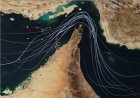
Iran’s newly formed Persian Gulf Strait Authority (PGSA) has declared a “controlled maritime zone” across the Strait of Hormuz, defining its boundaries from Kuh-e Mobarak in Iran to southern Fujairah in the UAE on the eastern side, and from the tip of Qeshm Island to Umm Al Quwain on the western side. Tehran says vessels transiting the corridor must coordinate with and obtain authorization from the PGSA, which it created to manage maritime security, traffic procedures and operational coordination in the strategically vital waterway that handles a large share of global oil and LNG shipments.
The Persian Gulf Waterway Management Authority has specified the supervisory and managerial boundaries of the Strait of Hormuz.
Iran has determined the supervisory boundaries of the Strait of Hormuz as follows: The line connecting Kuh-e Mobarak in Iran and the south of Fujairah in the UAE at the eastern end of the strait to the line connecting the end of Qeshm Island in Iran and Umm al-Qaiwain in the UAE at the western end of the strait.
The PGSA has begun issuing guidance and transit rules, and Iranian state-linked outlets report ships are being instructed to comply with new passage procedures and in some cases obtain permits. Tehran frames the measures as necessary to ensure safe navigation and sustainable maritime security, and officials say they are discussing coordination mechanisms with neighboring Oman. The move follows prior IRGC announcements of maritime control zones and appears to formalize systems that, according to some reports, have already involved inspections, checkpoints and informal arrangements including fees for passage.
International governments and maritime analysts have warned the new regime could clash with established navigation norms and raise risks for commercial shipping through the narrow chokepoint, potentially increasing volatility in energy markets. News agencies outlets note Iran has consolidated influence over routes through checkpoints and bilateral deals, while Persian Gulf states and Western governments reject unilateral fees or restrictions, citing the legal principle of transit passage that protects uninterrupted international navigation.