

IndyCar race set for D.C. anniversary
Freedom 250 to run near National Mall in 2026
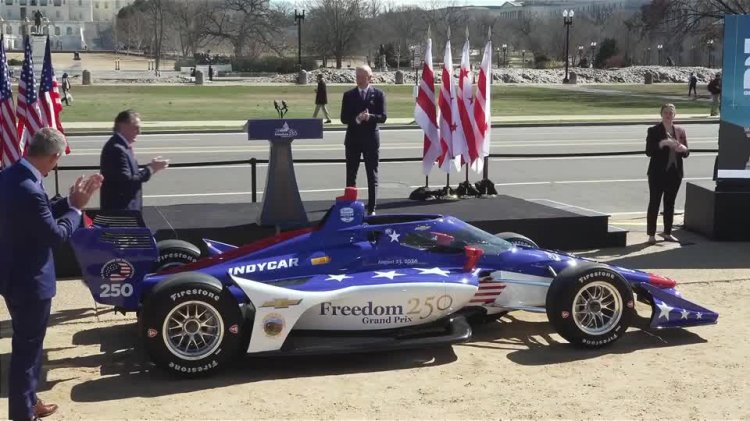
A special IndyCar street race in Washington, D.C., has been unveiled as part of the nation’s 250th anniversary celebrations, with officials describing the event as a blend of “history and horsepower.” The Freedom 250 Grand Prix is scheduled for August 22–23 on a roughly 1.7-mile temporary circuit that will route past the National Mall and several monuments, with organizers saying public entry will be free.
Officials previewing the spectacle highlighted the unique visual of high-speed open-wheel racing down major boulevards such as Pennsylvania, Constitution and Independence Avenues. Organizers stressed the event will showcase both American heritage and technological achievement in motorsport; IndyCar representatives and city leaders said the street layout will present the tight, technical challenges typical of urban circuits, offering a different test from traditional permanent tracks.
Government officials and local leaders participated in the public announcement, unveiling a themed show car and posing with personalized racing helmets. The race follows a presidential executive order calling for the event as part of semiquincentennial programming, and organisers are promoting it as a marquee attraction among a larger slate of national celebrations planned for 2026.
Preparations will require extensive temporary infrastructure—safety barriers, grandstands, broadcast and support facilities—and close coordination among city agencies, transportation planners and security services to manage logistics and public safety in the busy federal district. Organizers said they are working to finalize the course layout and operational plans to ensure driver and spectator safety.
Officials forecast the race will draw large crowds and international attention, potentially boosting local tourism and related business activity. Beyond on-track action, plans are expected to include ancillary festival programming—concerts, exhibitions and family-oriented displays tied to the semiquincentennial—to broaden appeal beyond motorsport fans.
IndyCar teams and drivers expressed enthusiasm about competing on a high-profile street circuit in the capital, noting the distinct demands of urban racing—precision braking, rapid acceleration and tight cornering within narrow, wall-lined confines. Organizers and city leaders framed the event as a contemporary complement to historic commemoration: a public celebration that pairs iconic national landmarks with modern racing spectacle to mark 250 years of American history.