

China unveils apple-picking robot
New AI system harvests fruit quickly to boost farm efficiency
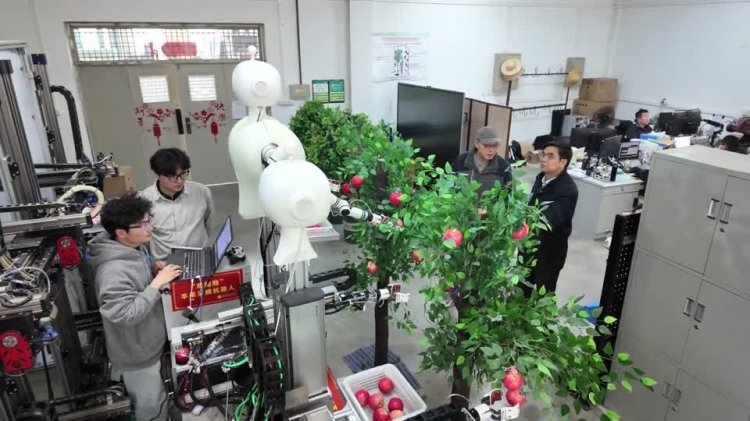
Chinese researchers have unveiled an apple‑picking robot system that can harvest a single fruit in 7.5 seconds, signaling a leap in agricultural automation. Developed at Northwest A&F University, the platform mounts two robotic units—“Big Guy” and “Little Guy”—on a continuous track to work the same tree at different heights. Big Guy, taller with human-like flexible joints, reaches fruit above 1.5 meters and maneuvers around branches; Little Guy covers lower fruit with a wider operational range and faster motions. Both are fitted with cameras on their heads and arms; onboard AI and computer‑vision algorithms analyze size, color and surface damage to select ripe apples and issue picking commands to dual mechanical arms designed to minimize bruising.
Researchers report trials in a northwest China lab and are testing performance over sloped, uneven ground and ditches to ready the system for real‑world orchards. The design aims to address labor shortages, boost productivity and reduce waste by harvesting only marketable fruit. The dual‑robot approach combines dexterity and speed—Big Guy’s adaptability around obstacles complements Little Guy’s rapid coverage—allowing coordinated, continuous operation on a mobile platform.
While earlier prototypes struggled with speed and obstacle avoidance, this system’s integrated sensing and motion planning improve accuracy and throughput, and its modular track base promises deployment across varying terrain. Developers envision integration into larger automated harvesting workflows, using data analytics to optimize picking schedules and fruit quality control.
The team cautions that field validation remains necessary to confirm durability, energy use, crop‑specific adjustments and economic viability at scale. If successful, the technology could shift labor needs in orchards, enhance supply‑chain efficiency and accelerate broader adoption of robotics and AI in agriculture as part of efforts to modernize food production.