

Putin meets Syria’s new leader in Moscow
Talks focus on Russia’s military role and future influence
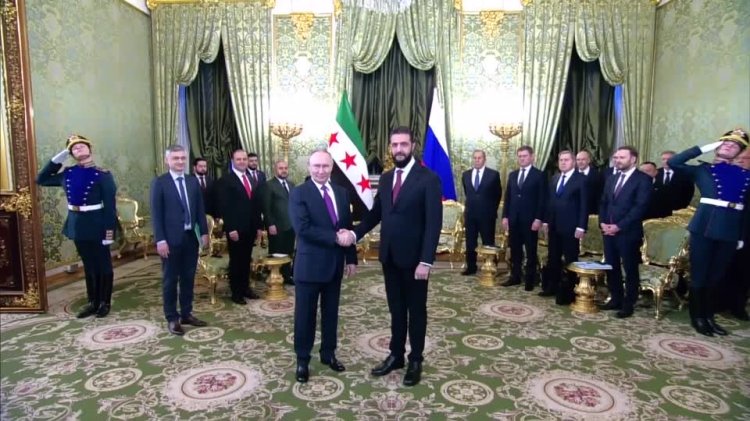
Russian President Vladimir Putin met Syrian leader Ahmed al-Sharaa in the Kremlin for talks that included Russia’s future military role in Syria, as Moscow seeks to secure a continued foothold following Sharaa’s Islamist coalition ousting of Bashar al-Assad in December 2024. Kremlin statements quoted Putin praising progress toward restoring Syria’s territorial integrity and signaling continued Russian political backing as Damascus moves to reassert control after more than a decade of conflict.
The visit came amid reports that Russia was pulling forces from Qamishli airport in northeast Syria while retaining its larger Hmeimim air base and the Tartous naval facility on the Mediterranean coast. Syrian officials said the withdrawal from Qamishli was interpreted in Damascus as a goodwill gesture and a signal that Moscow does not intend to be drawn into clashes between central government forces and the Kurdish-led Syrian Democratic Forces as Sharaa seeks to extend state authority across the country.
Putin framed recent developments as steps toward stabilisation and reunion of Syria’s institutions and territory, urging dialogue and coordination with regional actors and internal stakeholders. Russian messaging reiterated that external forces deployed without Damascus’s consent should withdraw and that Moscow supports Syria’s reintegration into regional diplomacy. Sharaa thanked Russia for its role in stabilising the situation and for diplomatic backing that Assad’s successors view as crucial to rebuilding ties with neighbouring states and re-entering international forums.
Analysts note the meeting underlines Moscow’s strategy to remain a key power broker in the Middle East by combining military presence, diplomatic support and economic engagement. Russia has secured reconstruction-era contracts in energy, infrastructure and ports, and officials signalled readiness to expand cooperation as conditions permit. At the same time, major rebuilding faces constraints from limited funding and Western sanctions.
On the ground, Syria remains divided: Kurdish-led forces hold the northeast, opposition pockets persist in the northwest, and multiple foreign militaries remain in parts of the country. Humanitarian, economic and governance challenges complicate efforts to consolidate control. Western governments expressed scepticism about claims of clear progress toward reunification, stressing the need for political reform, accountability and inclusive governance.