

Los Angeles protests mark Trump anniversary
Demonstrators rally against immigration policies
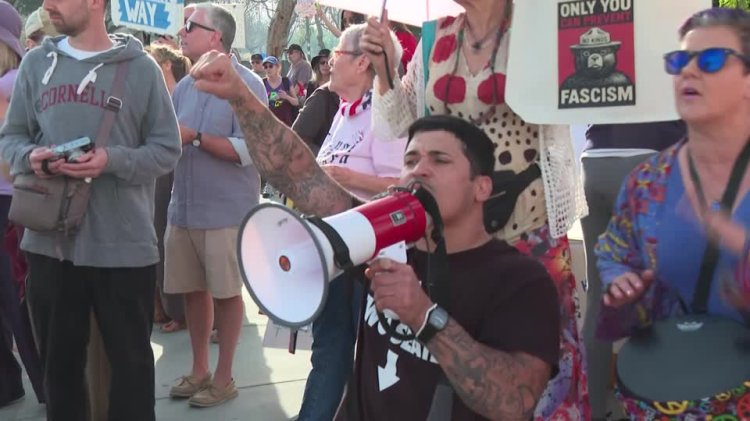
Protesters in Los Angeles took to the streets to mark the first anniversary of President Donald Trump’s second term, focusing criticism on his administration’s immigration policies. Crowds gathered in Venice Beach and other parts of city, chanting slogans such as “ICE, ICE out of LA” and holding placards reading “LA melts ICE” and “Free America.” Organizers—including Indivisible, 50501, labor unions and grassroots groups—said the demonstrations were part of a nationwide day of action against what they described as an aggressive enforcement campaign that fractures families and targets immigrants.
Speakers and participants framed the rallies as a response to recent enforcement incidents and broader policy trends they say have eroded civil rights and deepened inequality. Attendees recounted personal reasons for joining: some described long-standing frustration with deportations and raids, others cited specific cases that galvanized local activism. First-time protesters said they were moved to act by the perceived human cost of immigration enforcement.
Police maintained a visible presence; authorities reported the events in Los Angeles remained largely peaceful with no major clashes. Marches briefly disrupted traffic as demonstrators moved through central streets and beachside intersections; some bystanders joined spontaneously while others observed from sidewalks. Organizers urged continued civic engagement and pressure on elected officials, framing the demonstrations as a signal of sustained grassroots momentum ahead of upcoming political contests.
The Los Angeles demonstrations were mirrored by protests in multiple U.S. cities, illustrating persistent opposition to the administration even a year into its term. Supporters of the president counter that his policies have strengthened national security and improved the economy, reflecting the polarized national debate. Protest groups and unions called for policy changes, greater transparency in enforcement operations and expanded protections for immigrant families.
Observers and activists warned that the issues driving the protests—immigration enforcement, family separations and perceived civil-rights rollbacks—remain potent mobilizers across communities. Organizers said turnout demonstrated ongoing public concern and a willingness to sustain pressure through rallies, voter engagement and coalition-building, while critics cautioned that the demonstrations also reflect deep political divisions that continue to shape public discourse and policymaking.