

Landfill slide kills seven in Bekasi
Rescuers recover final victim at Bantargebang site
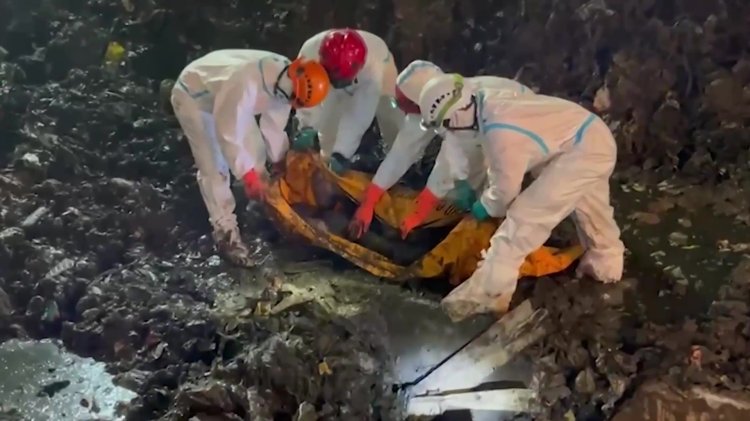
Search and rescue teams have ended operations at the Bantargebang Integrated Waste Processing Site in Bekasi, West Java, after recovering all victims of a garbage landslide, officials said. The final missing person, identified as 40-year-old Riki Supriadi, was found late evening and his body was taken to Kramat Jati Police Hospital in East Jakarta. Authorities confirmed seven fatalities and six survivors, bringing the incident’s total number of people affected to 13.
The collapse occurred when a large section of a towering waste pile suddenly gave way at one of the country’s largest landfill facilities serving Jakarta, burying workers and informal waste collectors who scavenge for recyclables. Witnesses reported a loud rumble as a wave of trash, mud and debris swept across parts of the site, leaving some unable to escape. Emergency teams, including firefighters, police and disaster responders, deployed excavators and carried out manual searches under challenging and unstable conditions.
Officials said the unstable terrain and the massive volume of accumulated waste complicated rescue efforts. Local authorities have launched an investigation into the cause of the collapse and whether safety protocols at the landfill were enforced. Environmental and engineering experts point to inadequate landfill management—such as poor drainage, uncontrolled layering of waste and lack of structural stabilization—as common factors that can trigger such landslides, especially when piles grow large or become waterlogged.
The tragedy has highlighted longstanding concerns about safety and environmental risks at Bantargebang, which receives thousands of tons of Jakarta’s garbage daily. Authorities indicated they will review conditions at other disposal sites to reduce the risk of similar incidents. Meanwhile, officials and aid agencies are focusing on providing support to affected families and on measures to protect informal waste collectors, whose livelihoods often depend on working at hazardous landfill sites.