

Kashubians revive feretron tradition
Pilgrims carry and dance sacred artworks in Poland’s annual procession
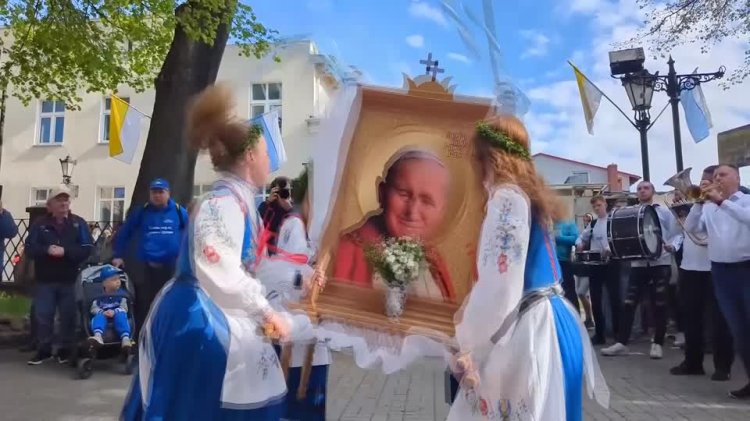
Catholics in northern Poland gathered for the annual Kashubian pilgrimage to Wejherowo Calvary, where the region’s distinctive feretron tradition—carrying, bowing and “dancing” large sacred artworks—was showcased. Feretrons, some weighing up to 120 kg, bear images of saints, martyrs and biblical scenes and are shouldered or mounted on poles by bearers who rhythmically sway, rotate and parade them through forested hills and village streets, accompanied by music, prayers and traditional costume. Pilgrims travel on foot from surrounding towns, sometimes carrying feretrons for miles, and communities spend months preparing the painted panels, flowers and ribbons that adorn the displays.
The practice blends Catholic devotion with Kashubian folk culture and is central to a weekend of religious observance, with participants saying the choreography expresses faith, community unity and cultural identity. Younger bearers train to master the coordination needed to maneuver towering structures safely through narrow streets; older devotees, such as a 90-year-old pilgrim who joined part of the route from Gdansk, describe the feretron dance as a highlight of the event. Some observers unfamiliar with the custom react with surprise or criticism, questioning whether the animated movements show proper reverence for the Virgin Mary, but practitioners reject that view, stressing voluntary participation and sincere devotion.
Local church leaders and cultural groups are working to preserve the ritual amid demographic change and modernization, promoting it as intangible cultural heritage while training new generations to continue the ceremonies. The spectacle has also attracted tourists and photographers eager to witness the visually striking combination of sacred art and folk performance. Historians link the feretron dances to a long history of rural Christian ritual fused with older regional customs, interpreting the spinning and waving motions as symbolic acts of blessing, protection and communal celebration that keep alive a centuries-old expression of faith and identity.