

Xi leads Martyrs’ Day tribute in Beijing
Tiananmen Square ceremony honors fallen heroes with patriotic rituals
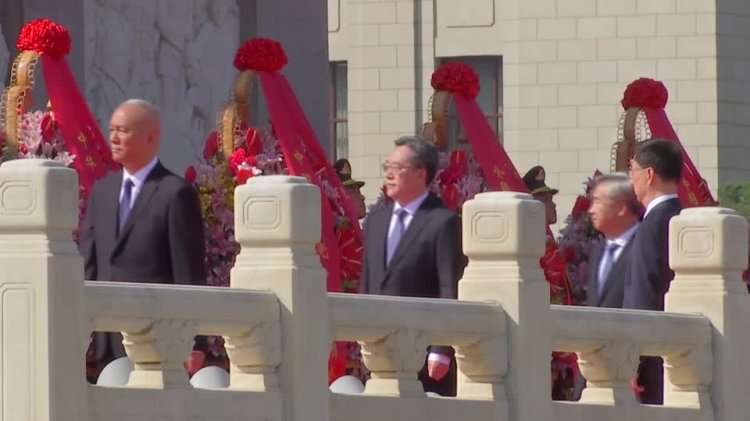
A larger-scale Martyrs’ Day ceremony was held at Tiananmen Square, where President Xi Jinping and senior Communist Party officials led a tightly choreographed state event to honor those who died for China’s independence. Xi placed a floral basket at the Monument to the People’s Heroes, flanked by members of the Politburo Standing Committee, as PLA honour guards marched and other official wreaths were laid. The ritual included a moment of silence and formal salutes; state media provided live coverage and close-up footage emphasizing ceremony and discipline.
The observance drew delegations representing a cross-section of society — veterans, military families, students, workers, community leaders and youth organizations — each taking part in readings, pledge recitations or musical performances intended to reinforce patriotic education. School choirs and uniformed youth groups performed patriotic songs, and selected representatives spoke about inheritance of martyrs’ ideals and responsibilities to national rejuvenation. Families of fallen servicemen and women were showcased, underscoring the human cost of past conflicts and the state’s narrative of sacrifice.
The event reiterated key official themes: unity under the Party, continuity between past sacrifices and present development, and the necessity of social cohesion for modernization. Authorities highlighted the Law on the Protection of Heroes and Martyrs as a legal backbone for state-sponsored remembrance, noting measures to preserve martyrs’ honor and penalize defamation. Coverage framed the ritual as both solemn commemoration and moral instruction, part of an ongoing effort to embed patriotic sentiment across education, media and public life.
Analysts and observers see such ceremonies serving multiple functions: honoring the dead, consolidating elite legitimacy, and projecting internal solidarity amid economic pressures and external geopolitical competition. By staging large, highly visible ceremonies on the eve of the National Day holiday period, the leadership reinforces national narratives that link historical struggle to present ambitions, while coordinating remembrance with wider holiday mobilization and public messaging.