

Milei pushes tax cuts and trade agenda
Argentine president seeks reforms after labor law victory
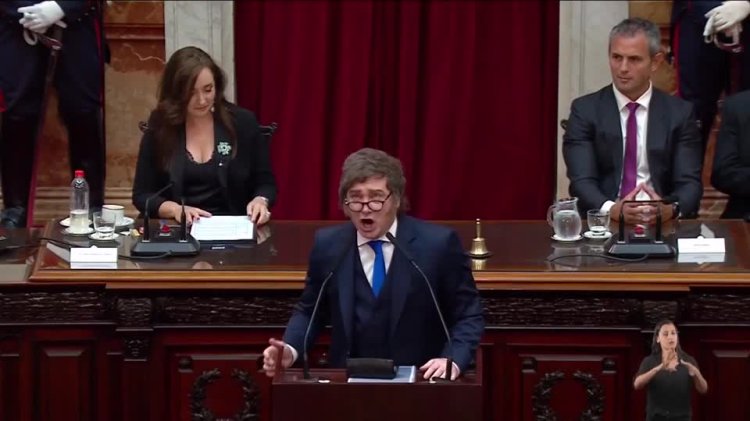
Argentine President Javier Milei used his congressional address to push for sweeping tax reductions, legal changes and an expanded trade agenda after a recent political victory that saw Congress approve contested labour reform. Speaking from the podium, Milei argued Argentina’s tax system is “distortionary and excessive” and must serve economic growth rather than revenue collection. He pledged to simplify levies, eliminate some taxes and gradually cut corporate and payroll rates to spur investment and job creation, framing these moves as essential to stabilizing an economy battered by high inflation and mounting debt.
Milei also announced plans to pursue amendments to the electoral and criminal codes and said his government would press ahead with ratifying trade agreements—citing one with the European Union already completed and indicating a desire to cement closer ties with the United States. He described the current U.S. administration as having offered unprecedented support to Argentina and emphasized a shift toward deeper integration in global markets, including bilateral and regional pacts beyond traditional blocs while maintaining engagement with Mercosur.
On fiscal policy, Milei defended cuts in public spending and measures aimed at reducing the budget deficit, arguing that fiscal discipline and deregulation are necessary for long-term stability even as critics say austerity has harmed social programs and public-sector wages. Opposition lawmakers voiced caution: some warned that swift tax reductions could undermine public finances without corresponding revenue growth, while others highlighted rising poverty and unemployment as consequences of contractionary policies.
The speech followed the ruling coalition’s strengthened position after midterm elections and the February passage of controversial labour reform, events Milei presented as a mandate to advance his market-oriented agenda. He urged Congress to back structural reforms to modernize the economy, portraying the package of tax cuts, legal revisions and trade initiatives as the next phase of his administration’s effort to restore confidence and attract capital amid deep-seated economic challenges.