

Costa Ricans vote to choose next president
Chaves ally leads polls as election tests policy continuity
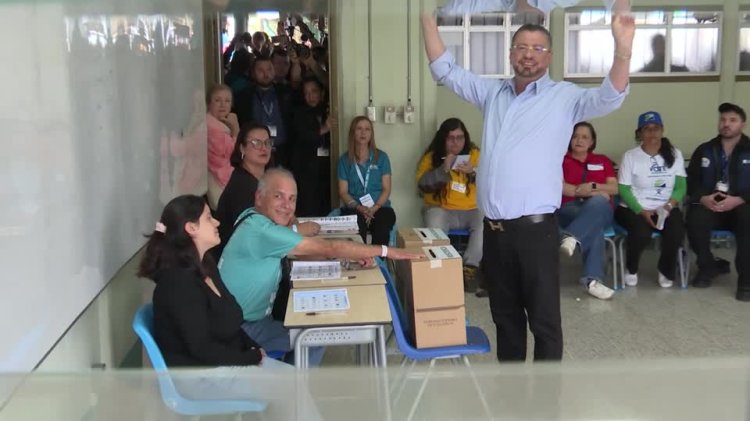
Costa Rican voters went to the polls to choose a successor to President Rodrigo Chaves, who cast his ballot in San José’s Guadalupe neighborhood and urged participation among some 3.7 million registered voters. Chaves, a former World Bank economist with strong approval ratings but barred by law from immediate reelection and facing corruption probes, watched as his handpicked protégé, Laura Fernández, led opinion polls near the 40% threshold needed to avoid a runoff.
Fernández, a former minister and close ally of Chaves, campaigned on policy continuity, stressing tough security measures and an anti‑establishment message that appeals to voters worried about rising violent crime, public insecurity and economic strains. Polls and early counts placed her substantially ahead of rivals in a crowded 20‑candidate field; Álvaro Ramos of the National Liberation Party and former first lady Claudia Dobles were the nearest challengers, polling in single digits and seen as the most likely alternative if a runoff becomes necessary.
The vote is framed as a referendum on Chaves’ tumultuous presidency and his approach to governance. Economic concerns — including public debt, inflation and job creation — and social issues such as healthcare, education and inequality were central to campaigning, alongside Fernández’s promises to continue Chaves’ security agenda. Observers noted a fragmented political landscape in which second‑round alliances often decide outcomes because a candidate must secure more than 40% to win outright.
Electoral officials reported polling stations opened smoothly nationwide and turnout was expected to be high, reflecting Costa Rica’s strong electoral traditions. The Supreme Electoral Tribunal scheduled initial results for release after polls closed, with manual verification to follow. Business groups urged post‑vote stability to reassure markets, while civil society and unions pushed candidates to commit to protecting rights and social spending.
International observers monitored the election as a test of Costa Rica’s democratic resilience amid regional volatility. Supporters of Fernández portrayed a campaign for decisive action on crime and continuity; critics warned that concentrated power and Chaves‑style confrontational politics risked weakening institutional checks. Whether the presidency is decided in the first round or proceeds to a runoff will shape the country’s political and policy course on security, economic management and democratic governance for the coming term.