

Cheese rolling contest returns to Gloucestershire
Crowds brave heat and steep slopes at Cooper’s Hill
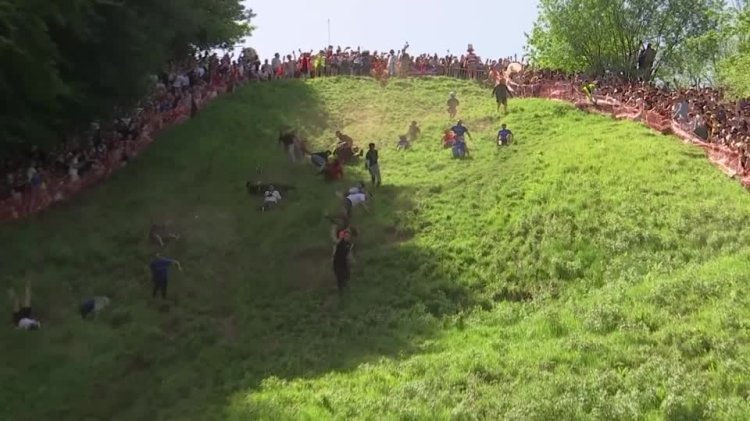
Competitors and spectators gathered at Cooper’s Hill in Gloucestershire for the annual cheese‑rolling contest, a centuries‑old spectacle in which runners chase a wheel of Double Gloucester down a near‑vertical 180‑metre slope. The cheese is released just before each heat and typically outpaces competitors; victors are those who reach the bottom first. This year’s event unfolded under sweltering conditions above 30°C, adding heat stress to an already hazardous descent.
The gradient and uneven grassy surface make the race prone to tumbles and injuries; volunteer medics and rescue teams were stationed around the course and treated participants for sprains, cuts, bruises and occasional fractures. Entrants are required to acknowledge the risks, yet many described the experience as exhilarating—powered by crowd energy and the chaotic momentum of the downhill pursuit. Separate men’s and women’s heats produced winners who received the traditional wheel and widespread media attention.
Organisers and local authorities stressed emergency readiness and crowd management as thousands of onlookers lined the hillside, some in costume, amid a festival atmosphere of music, food stalls and local stalls. The event’s origins are thought to lie in springtime folk rituals marking seasonal change; over time the contest has become an internationally recognised oddity, amplified by viral footage of competitors flipping and sliding head over heels.
Despite long‑running safety concerns and criticism from some quarters, supporters argue the tradition is an important part of local culture and tourism. Officials acknowledged the recurring hazards but defended the balance between preserving the custom and ensuring public safety, pointing to medical teams and marshals positioned to respond quickly. The spectacle’s combination of risk, folklore and athletic bravado continues to draw participants and visitors from across the UK and abroad, reinforcing Cooper’s Hill as one of Britain’s most eccentric and enduring rural events.