


Arrests at protest outside Palantir
Activists oppose firm’s surveillance contracts
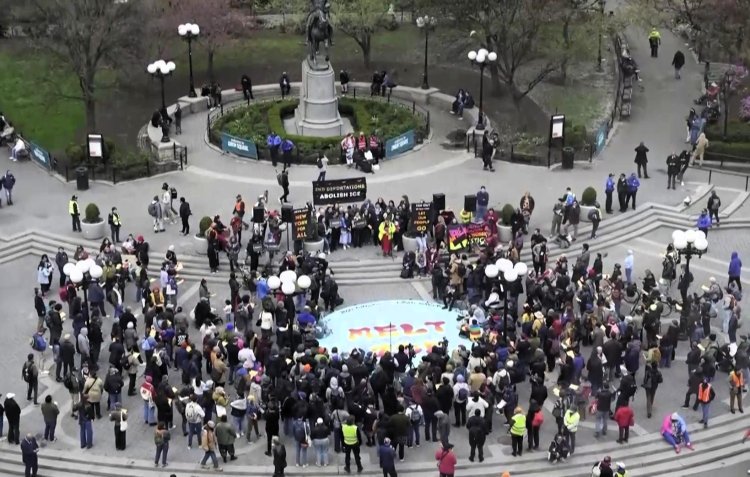
Several people were arrested outside Palantir’s New York offices during a protest led by Jewish community leaders, elected officials and activists who oppose the company’s role in federal immigration enforcement and surveillance contracts. Organizers staged a public Passover observance earlier in the day, using the holiday’s themes of liberation to frame objections to Palantir’s artificial intelligence and data systems. Demonstrators gathered at locations linked to the firm, chanting, holding banners and calling for an end to contracts they say contribute to human rights abuses and militarized surveillance.
Tensions escalated as protesters blocked access to company premises and declined police orders to disperse. Law enforcement moved in to clear the area and detained several participants; authorities said arrests were necessary to maintain public order. Protest groups criticized the police response as heavy-handed, arguing the action was a peaceful moral protest grounded in humanitarian concerns. Many participants identified their protest as rooted in Jewish values and emphasized a duty to oppose practices they view as unjust.
Palantir has faced sustained criticism for its government contracts and involvement in defense and security projects. Company representatives maintain their technology supports national security and public safety, saying their tools help agencies manage complex data and protect communities. Critics counter that the deployment of advanced data systems and AI in immigration enforcement and military contexts raises ethical questions and potential human rights implications.
The demonstration reflects broader scrutiny of the tech industry’s role in security operations and the growing movement demanding transparency and accountability from firms whose technologies are used by governments. City officials said the situation was brought under control after the arrests. Organizers indicated they may continue to press their demands with additional demonstrations, signaling that tensions over the intersection of technology, surveillance and human rights are likely to persist.