

Pope Leo urges unity in Angola
Pope Leo called for reconciliation and national unity in Angola
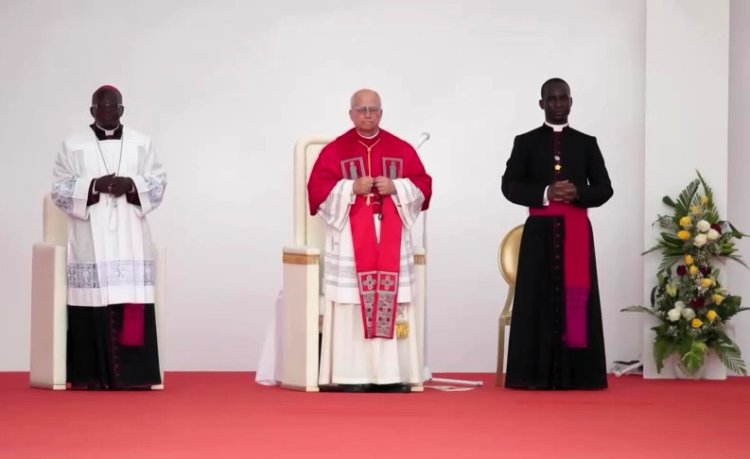
Pope Leo delivered a forceful appeal for national reconciliation in Angola during two large public events that together drew about 130,000 people. He first celebrated Mass outdoors in Kilamba, a sprawling housing development outside the capital, where he described Angola as a “beautiful yet wounded country” after decades of conflict. Addressing the crowd, he urged citizens to “build together a country where old divisions are overcome once and for all, where hatred and violence disappear,” framing his message around healing, unity and the need to leave behind the legacy of a 27-year civil war.
After the Mass, the pope traveled by helicopter to the Catholic shrine in Muxima on the edge of the Kwanza River, where thousands gathered in hot, humid conditions. The atmosphere there was lively, with worshippers dancing and singing as the pope was driven through the crowd in a white vehicle. The shrine occupies the site of a 16th-century Portuguese fortress that was central to the transatlantic slave trade; historians estimate the trade captured millions of people from the region to be sent to the Americas. While he did not reference the site’s painful history in his remarks, he reiterated calls for peace, social justice and solidarity and encouraged Angolans to work together to build a more just society.
Local church leaders described the turnout as extraordinary, saying the scale of participation reflected both strong religious devotion and the significance of the papal visit for national healing. The pope’s public appeals extended beyond spiritual themes to practical concerns, as he urged support for young people, attention to economic hardship, and measures to reduce inequality that affects many families. Organizers and security teams coordinated logistics across the venues to manage the large crowds and ensure safe access to the events.
Observers noted that the visit underscores the Vatican’s focus on Africa as a priority region for growth in the global Catholic community and a site for dialogue on peace and development. By emphasizing reconciliation and collective responsibility, the pope sought to reinforce momentum toward unity and long-term recovery in a country still marked by the social and political aftershocks of prolonged conflict.