

NASA expands plans for permanent moon base
New contracts support lunar vehicles and long-term habitats
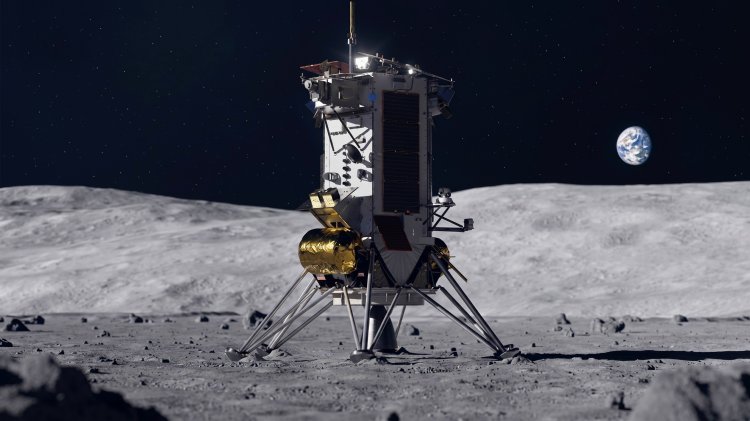
NASA announced expanded plans for a sustained lunar base and disclosed hundreds of millions of dollars in contracts to U.S. companies to build surface capabilities. Officials outlined a three-phase strategy: Phase One, already underway, will execute 25 launches and 21 lunar landings to deliver about four metric tons of cargo; Phase Two, beginning in 2029 and extending into the early 2030s, will establish permanent infrastructure such as a lunar power grid and raise cargo deliveries to roughly 60 metric tons; Phase Three in the 2030s aims to support long-duration crews in specialized habitats with cargo flows potentially rising to 150 metric tons.
Contract awards announced include Blue Origin ($188 million plus a $280 million option) to deliver lunar terrain vehicles and cargo with its Blue Moon Mark One Endurance lander, carrying instruments such as stereo cameras for plume-surface studies and a Laser Retroreflective Array for precise positioning; Astrolab ($219 million) to develop a crewed lunar vehicle for transporting astronauts and cargo across the surface; Lunar Outpost ($220 million) to build the autonomous Pegasus lunar terrain vehicle; and Firefly Aerospace to support the MoonFall mission, which will deploy the program’s first short-hop lunar drones with design and prototypes from the Jet Propulsion Laboratory.
Program leadership described a long-term vision for a sprawling, modular outpost—potentially covering hundreds of square miles—monitored by perimeter drones and composed of interoperable assets to scale from short visits to six-month stays with biannual crew rotations. NASA emphasized locating infrastructure near the lunar south pole to access suspected water-ice deposits for life support and propellant production, and highlighted power-generation plans including solar arrays and possible nuclear units to bridge the Moon’s long nights. The Lunar Gateway orbital station was cited as a staging point for surface missions and broader deep-space exploration.
Officials framed the moon base as a scientific and technological testbed that will advance Earth-facing technologies and act as a stepping stone to Mars by maturing long-duration life-support and deep-space operations. They acknowledged significant challenges—high launch costs, technical risk, and the difficulty of sustaining humans in an airless, radiation-exposed environment—but said recent Artemis progress and growing private-sector capability make a permanent lunar presence increasingly attainable over coming decades.